In 2026, global sourcing has become more important for online sellers. Many businesses started looking beyond the USA for stable and affordable wholesale suppliers after the major supply logistics disruptions between 2020 and 2025.
To stay competitive, e-commerce sellers on platforms such as Shopify, Amazon, and TikTok Shop now depend on international sourcing. Relying only on local US suppliers can often limit product variety and increase costs, especially in fast-moving global markets.
According to global trade reports from the World Trade Organization (WTO), cross-border merchandise trade is steadily increasing as more manufacturing moves to Asia and Europe. Countries like China, Germany, and Vietnam are now important sourcing hubs for buyers worldwide.
This article will show you how to find reliable wholesale suppliers outside the USA, check their trustworthiness, handle shipping, and reduce import risks to help your business grow over time.
Key Benefits of Sourcing Wholesale Suppliers Outside the USA
Here are some main benefits of working with wholesale suppliers outside the USA:
- Sourcing from places like Asia or Eastern Europe often means lower production and wholesale costs, which can help sellers earn higher profits.
- Many factories around the world offer competitive prices while still maintaining solid quality.
- You can find unique or hard-to-get products that are not available in the US, which helps your brand stand out.
- Cheaper manufacturing and bulk pricing can lead to stronger profit margins.
- Spreading your supply chain across multiple regions reduces risk, so you are not dependent on just one country or supplier.
- Sourcing globally makes it easier for e-commerce brands to grow, add new products, and serve customers worldwide.
Major Global Wholesale Sourcing Regions (2026 Breakdown)
Asia
In 2026, Asia remains the top region for sourcing. China leads in electronics, toys, and general goods, with major hubs like Shenzhen and Yiwu. India is a leader in textiles, jewelry, and Ayurvedic products. Vietnam specializes in apparel and electronics assembly, while Bangladesh is recognized for affordable garment production.
The main benefits are low costs and the ability to produce large volumes. Still, there are risks such as uneven quality control and communication difficulties, so careful vetting is important for dependable sourcing.
If you are looking for verified apparel and clothing wholesale suppliers, WholesaleSeeker has a curated directory to help you get started.
Europe
For high-quality and regulated manufacturing, Europe is quite popular. Germany is known for top-quality automotive and industrial products. Italy stands out for its premium fashion and luxury items. Turkey supplies strong textile and leather goods at competitive prices. Eastern European countries like Poland offer cost-effective manufacturing within the EU and meet strict compliance standards.
The main advantage is the strict EU safety and quality regulations, which make products more reliable. Buyers enjoy stable supply chains, but prices are usually higher than in Asia.
United Kingdom
For niche wholesale sourcing, the United Kingdom is a strong option. Manchester and London are home to many fashion wholesalers, artisan products, and boutique brands. The UK is also recognized for its health, beauty, and small-batch premium goods aimed at high-end markets. Since Brexit, trade rules have changed, which means more paperwork but also new opportunities for exporters.
UK suppliers are a good choice for sellers who want unique, limited-edition, or branded products. Although prices are higher than in Asia, the quality and strong branding make them a great fit for premium online stores.
You can browse verified wholesale distributors in the UK directly on WholesaleSeeker to find niche and boutique suppliers.
Sellers interested in premium goods should also explore the Health, Beauty & Wellness supplier category for UK-sourced products.
Canada
Canada is known for stable supply chains and high manufacturing standards. The country is a strong source of agricultural products, natural supplements, and eco-friendly goods. Its strict safety regulations are similar to those in the USA, which helps North American sellers meet compliance requirements more easily. Because Canada is close to the US, shipping is faster, and logistics costs are lower than with overseas suppliers.
For sellers looking for reliability and consistent product quality, Canada is a strong alternative sourcing region. However, production costs are often higher than in Asian markets.
Explore wholesale distributors in Canada across a range of product categories on WholesaleSeeker.
Emerging Markets (High Growth in 2026)
Emerging markets are becoming increasingly important in global sourcing. Brazil supplies agricultural products and leather goods. Mexico is expanding in the automotive and electronics sectors as more companies move production closer to the US. Indonesia offers furniture, handicrafts, and textiles at competitive prices. These countries are central to the “China +1 strategy,” which helps businesses spread their sourcing beyond China. This approach lowers risk, increases flexibility, and makes global supply chains more resilient in 2026.
How to Find Reliable Wholesale Suppliers (Step-by-Step Framework)
Step 1 – Use Verified B2B Marketplaces
Europages
Europages is a well-established European B2B directory that connects global buyers with wholesale suppliers across multiple industries. It is especially useful for sourcing from Europe because it features detailed company profiles, certifications, and product catalogs. The platform supports multilingual search, making supplier discovery straightforward. Each supplier profile includes verified certifications and product documentation, giving buyers a practical way to assess partners before reaching out — which reduces fraud risk and helps establish reliable wholesale partnerships for international sellers.
Tradewheel.com
Tradewheel.com is a global B2B marketplace that connects buyers directly with verified manufacturers across Asia and Europe, covering product categories from electronics to apparel. With trade leads that help cut sourcing time significantly, it is a solid platform for buyers looking for cost-effective suppliers without spending weeks on manual research. Its communication tools and dedicated support make it easier to navigate international sourcing, especially for buyers new to global trade.
IndiaMART
IndiaMART is one of the largest B2B platforms in India, giving buyers access to millions of suppliers across manufacturing, textiles, machinery, and consumer goods. For sellers targeting cost-effective Asian sourcing, it offers a broad supplier base with the ability to compare quotes, message sellers directly, and verify business credentials — all in one place.
Step 2 – Attend International Trade Shows
Visiting global trade shows helps you meet suppliers face-to-face, inspect product quality, and build trust instantly. Events like the Canton Fair and Ambiente Fair provide direct access to verified manufacturers. These exhibitions reduce fraud risk, improve negotiation power, and allow real-time comparison of wholesale products for smarter sourcing decisions.
WholesaleSeeker maintains a list of featured upcoming trade shows that are worth checking before planning your next sourcing trip.
Step 3 – Explore Industry Directories & Trade Associations
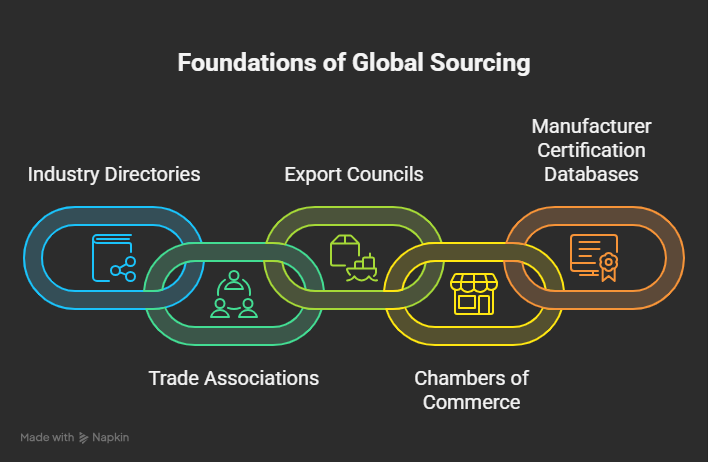
Industry directories and trade associations are effective tools for finding verified wholesale suppliers. Export councils, chambers of commerce, and manufacturer certification databases provide trusted listings of compliant businesses. These sources ensure suppliers meet international quality and regulatory criteria. They also help buyers access niche manufacturers, reduce sourcing risks, and improve credibility when entering new global markets.
Step 4 – Use Freight Forwarders & Sourcing Agents
Freight forwarders and sourcing agents ease international wholesale buying by handling logistics, supplier communication, and quality inspections. They help overcome language barriers and improve negotiation outcomes with local manufacturers. Although they add service costs, they substantially lower risks like shipping delays, fraud, or product mismatches — which can be far more expensive to fix after the fact.
How to Vet International Wholesale Suppliers
Start by confirming the business is legitimate. Check registration details, tax ID, and VAT numbers to make sure the supplier is genuine. Many trustworthy factories also share inspection reports from independent agencies.
Next, always request samples before placing bulk orders. This helps you test product quality, durability, and packaging standards.
Pay close attention to communication. Good suppliers reply promptly, provide clear answers, and assign a specific account manager. Poor communication is a major red flag when buying globally. For a full list of warning signs to watch out for, read our guide on Supplier Red Flags: 25 Warning Signs of a Risky Vendor.
Look at reviews and sales history on B2B platforms. Long-standing suppliers are generally more reliable than newly registered ones.
Finally, consider factory checks and audits by third-party companies like SGS or Bureau Veritas. These verify production capacity, working conditions, and product quality before you commit to large orders.
Common Mistakes When Sourcing International Suppliers
- Choosing suppliers based purely on the lowest price often results in poor product quality.
- Skipping sample testing before placing bulk orders.
- Failing to verify certifications, which raises the risk of compliance violations.
- Using vague contracts that lead to disputes over quality or delivery timelines.
- Not understanding import regulations can cause customs delays or financial penalties.
Successful sourcing means balancing cost, quality, and reliability. Always choose trusted suppliers, use clear contracts, and test thoroughly before committing to large quantities.
Data & Market Trends (2026 Insights)
Global cross-border e-commerce is expected to grow into a multi-trillion-dollar market by 2026, driven by platforms such as Amazon, Shopify, and TikTok Shop. Reports from UNCTAD show steady growth in digital trade and international B2B sourcing. Asia still leads global manufacturing, especially in electronics, textiles, and everyday products. However, Europe is tightening regulations around safety, eco-friendliness, and product quality — making supplier vetting more important than ever.
At the same time, small online brands are buying directly from manufacturers instead of going through middlemen. This helps them earn higher margins and maintain better control over product quality. The “China +1 strategy” is also becoming more popular, encouraging sourcing from multiple countries to lower concentration risk. These trends point clearly toward diversified sourcing and compliance-first thinking as the keys to long-term business success.
If you are selling through e-commerce channels, it is also worth exploring what the best dropshipping products to sell in 2026 look like, as global sourcing directly feeds into the dropshipping strategy.
Conclusion
In 2026, global sourcing is not about chasing the lowest price — it is about building a supply chain you can trust. Successful e-commerce businesses focus on reliable partnerships, consistent quality, and smart logistics. Each region offers unique strengths, but real growth comes from managing risk and diversifying suppliers.
Pro tip: Always secure backup suppliers before you need them.
A strong, flexible supply chain does not just reduce risk — it becomes your biggest competitive advantage in scaling and sustaining a global e-commerce business. Ready to find suppliers? Browse WholesaleSeeker’s full directory of verified wholesale distributors across the USA, UK, and Canada to get started.