

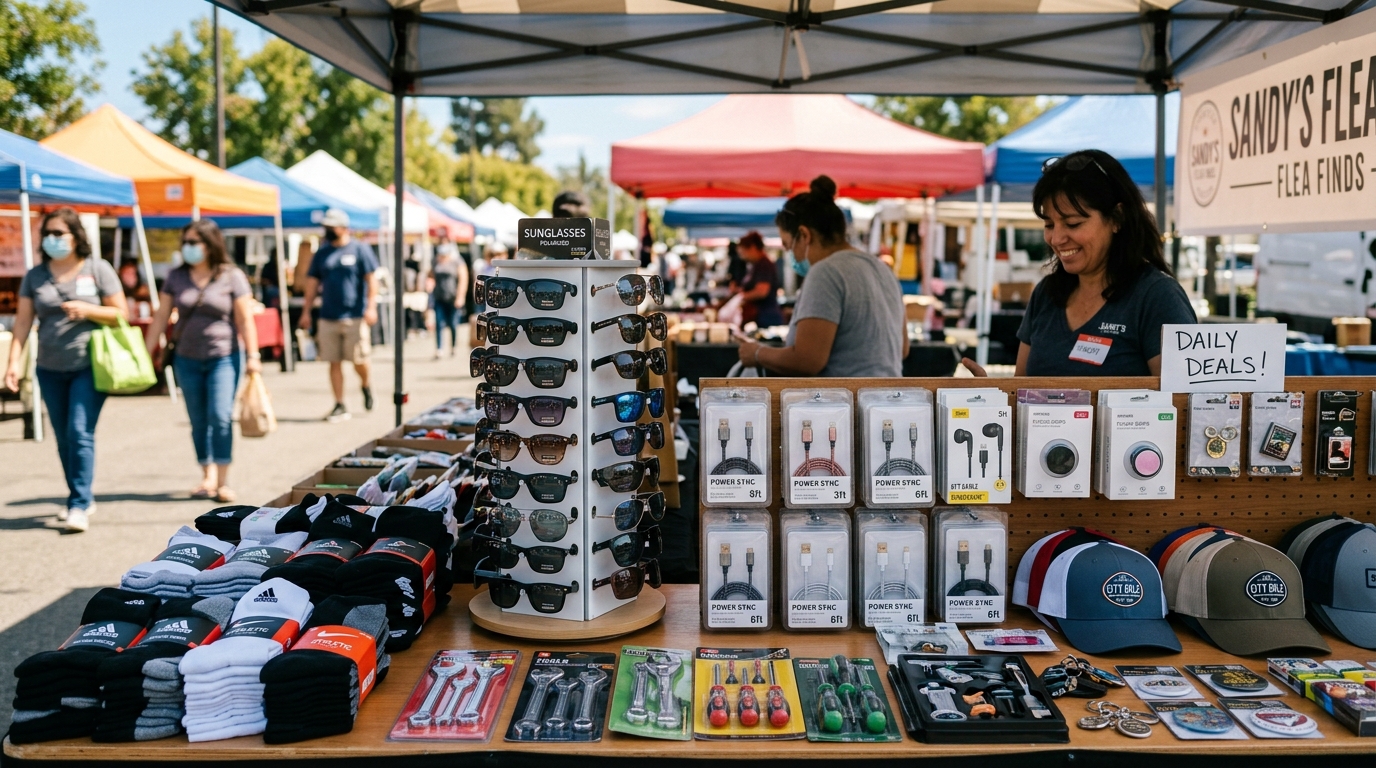
The busiest tables at a flea market are rarely the ones with the most elaborate displays. They sell everyday essentials priced for quick cash transactions: five-dollar phone cables, multi-pack work socks, and inexpensive pocket toys.
Flea market inventory succeeds when unit costs are low, utility is immediate, and markups leave room for vendor booth fees. This guide details the categories that consistently move volume, items to avoid, and verified wholesale sourcing channels used by experienced vendors.
Why Some Things Fly Off the Table
Flea market shoppers are not on a planned shopping trip. They are browsing. Most of them did not come for anything in particular.
That changes what sells. The winners usually tick most of these boxes:
- Low price. Anything under $20 is an easy yes. Under $10 is an impulse buy.
- Easy to understand. If you need to explain what it does, you have already lost most people.
- Useful right now. A charger when their phone is on 8%. Sunscreen when the sun is out.
- Easy to carry. People walk for hours. Small items win.
- Feels like a deal. Shoppers expect to pay less than in a store. If your price matches Walmart, they walk on.
Keep those five points in mind as you read the list below. Almost every top seller fits them.
The Best Things to Sell at a Flea Market
Here are the categories that sell well at most flea markets across the country. Your local crowd will lean toward some more than others, so treat this as a starting list, not a rule.
1. Phone accessories
Charging cables, wall plugs, car chargers, phone cases, screen protectors and earbuds are some of the most reliable sellers out there.
Everyone has a phone. Cables break and get lost all the time. A $5 or $10 cable is an easy purchase, and the cost per unit when you buy by the case is low.
Stock the common types first: USB-C and Lightning cables, and cases for the most popular iPhone and Samsung models. Skip cases for older or rare phones unless you know your customers ask for them.
2. Socks, underwear and basics
Apparel basics move consistently every weekend. Multi-pack athletic and work socks, plain cotton T-shirts, work gloves, beanies, and underwear offer steady volume because consumers restock them regularly and prefer avoiding mall retail markups.
Volume pricing structures perform best in this category. Offering bundled pricing, such as three pairs for $10, yields higher gross revenue than pricing individual pairs at $4 each.
3. Hats, sunglasses and fashion accessories
Ball caps, bucket hats, sunglasses, belts, wallets, hair clips and simple jewelry all do well, especially at outdoor markets in warm months.
These items are light, cheap to buy in bulk and easy to display on a rack where people can try them on. A mirror on your table helps more than you might think.
Stay with unbranded or generic styles. Selling fake designer goods is illegal, and it is the fastest way to get thrown out of a market.
4. Toys
Children frequently accompany parents to weekend markets, creating steady impulse demand for inexpensive novelty items.
High-turnover items include fidget items, bubble wands, slime tubs, die-cast toy cars, plush figures, and seasonal water guns. Keeping standard stock under $10 encourages fast purchases, while a few larger boxed sets on upper display risers draw foot traffic to the table.
Many vendors buy toys by the case from wholesalers or by the pallet from liquidation sellers. Our guide on where to buy toy pallets covers the pallet route in detail.
5. Cleaning supplies and household goods
Laundry detergent, dish soap, sponges, trash bags, paper towels and air fresheners sell steadily because people use them every week.
The margin per item is smaller than on toys or accessories, but these products bring shoppers back again and again. A regular customer who buys detergent from you every month is worth a lot over a year.
Closeout and overstock lots are a common source here, since brands clear out old packaging designs all the time.
6. Tools and hardware
Screwdriver sets, tape measures, utility knives, work gloves, flashlights, zip ties, extension cords and basic hand tools sell well, especially to men who would otherwise drift past your table.
Tools are a classic flea market category. Buyers like to pick them up and feel them before paying. Lay them out so they can.
7. Kitchen gadgets
Peelers, can openers, storage containers, spice racks, silicone utensils and knife sets are popular. Anything that solves a small daily annoyance tends to sell.
If you plan to carry kitchen knives, buy from a proper wholesaler so the quality is consistent. Our list of wholesale knife distributors in the USA is a good place to start.
8. Snacks, candy and cold drinks
Hungry, thirsty shoppers buy on the spot. Bottled water and soda on a hot day can be one of the best earners at the whole market.
Packaged candy, chips and snacks bought by the case also sell well. Check your market rules first, though. Many markets limit food sales or require a separate permit, even for sealed items.
9. Seasonal items
Carrying seasonal inventory yields concentrated sales surges when timed correctly:
- Spring: garden tools, seeds, plant pots, Easter baskets.
- Summer: sunscreen, hand fans, water guns, pool toys, flip flops, cooling towels.
- Fall: Halloween costumes and decorations, school supplies, hoodies.
- Winter: gloves, scarves, beanies, holiday decorations, gift sets, wrapping paper.
The key is timing. Buy seasonal stock a month or two early, and sell it hard in the weeks before the holiday. After the holiday, it is worth far less.
10. Beauty and personal care
Nail polish, lip gloss, makeup brushes, hair accessories, lotions, body sprays and travel-size toiletries sell well, especially when priced low.
Many vendors buy these as closeout lots from brands clearing old stock. Check expiry dates and only sell sealed products. Our guide to wholesale hair and beauty distributors lists suppliers that sell to resellers.
11. Pet supplies
Leashes, collars, chew toys, treats, food bowls and grooming brushes sell well because pet owners shop for their pets almost as much as for themselves.
Bring a dog bowl of water for visiting dogs. It brings owners to your table and makes them stay longer.
12. Vintage, used and collectible items
This is the classic flea market category and still one of the most profitable. Vintage clothing, old vinyl records, comics, sports cards, old toys, retro video games, vintage kitchenware and antiques all draw collectors.
The difference is how you source it. You will not find vintage stock through a wholesaler. You find it at estate sales, garage sales, thrift stores, auctions and storage unit sales, then resell it at a markup.
It takes more work and more knowledge, but the margins on a good find can be many times higher than on new stock.
13. Plants and garden goods
Small potted plants, succulents, herbs and cuttings sell well in spring and summer. Garden tools, gloves and decorative pots fit alongside them.
Plants are bulky to transport and need care, so start small and see how your market responds.
14. Batteries, lighters and small essentials
AA and AAA batteries, lighters, small flashlights and reading glasses are classic “I forgot to buy that” items. They are tiny, sell all year and cost very little when bought in bulk.
Put them near your payment spot. They make perfect add-on sales while someone is already paying for something else.
Quick Price Guide for Popular Flea Market Items
These are typical selling price ranges at US flea markets. Your local market may be higher or lower, so use them as a rough guide and check what nearby tables charge.
| Item | Typical selling price | Why it sells |
|---|---|---|
| Phone charging cable | $5 to $10 | Everyone needs one, they break often |
| Phone case | $8 to $15 | Impulse buy, many styles |
| Socks (multi-pack) | $5 to $12 | Everyday basic, bundle deals work |
| Sunglasses | $5 to $15 | Outdoor shoppers, try-on appeal |
| Baseball cap | $8 to $15 | Easy display, wide appeal |
| Small toy | $2 to $10 | Kids pick, parents pay |
| Laundry detergent | $5 to $12 | Repeat purchase every month |
| Screwdriver or tool set | $10 to $25 | Hands-on category, steady demand |
| Kitchen gadget | $3 to $10 | Solves a small daily problem |
| Bottled water or soda | $1 to $3 | Hot day, thirsty crowd |
| Vintage record or collectible | $5 to $50 and up | Collectors pay for the right piece |
A simple rule many vendors use: aim to sell at two to three times what you paid. That leaves room for booth fees, unsold stock and haggling. Our profit margin calculator makes it quick to check your numbers before you buy.
What Not to Sell at a Flea Market
Knowing what to skip saves you as much money as knowing what to buy.
- Fake designer goods. Selling counterfeit brands is illegal. Markets check, and police raids on flea markets happen.
- Big, heavy items with no demand. Large furniture can sell, but only if you have the space and the right crowd. Otherwise you pack it up again every week.
- Untested electronics. Used gadgets with no way to test them lead to arguments and refunds.
- Expired or opened products. Food, cosmetics or medicine past their date, or with broken seals, are a safety risk and a fast way to lose trust.
- Things that need a long explanation. If people have to read a manual to understand it, they keep walking.
- Items you can’t legally sell in your state. Some states and cities restrict things like pepper spray, certain knives or fireworks. Check before you stock them.
Where to Buy Flea Market Inventory
Retail arbitrage fails at flea markets because end-customer prices must sit below standard retail. Sourcing requires commercial wholesale accounts, liquidation manifests, or secondary market clearances.
Flea market vendors primarily source inventory through several established trade channels.
1. General merchandise wholesalers
These are distributors that sell a wide mix of everyday products by the case: household goods, accessories, toys, tools, health and beauty. Many of them serve dollar stores, convenience stores and flea market vendors.
You usually need a business and a resale certificate to open an account, and there is often a minimum order. Some online wholesalers, such as DollarDays, let smaller buyers order without a big minimum.
You can find verified wholesalers by category in the WholesaleSeeker directory.
2. Closeout and liquidation sellers
Closeout sellers buy overstock, discontinued lines and old packaging from brands and stores, then sell it cheap. Liquidation sellers handle customer returns and shelf pulls, often by the pallet.
This is where vendors find the biggest discounts, sometimes buying at a small fraction of the retail price. The trade-off is that you do not always control what you get. Read our guide to liquidation pallet suppliers before you buy your first pallet.
3. Wholesale districts in big cities
Many large cities have streets full of wholesale shops that sell to vendors in person. The Los Angeles Fashion District and the wholesale blocks around Broadway in Manhattan are two of the best known.
The big advantage is that you see the stock before you pay and take it home the same day. Bring cash, a resale certificate and a list of what you want, or it is easy to overspend.
Browse wholesale suppliers in California and wholesale suppliers in New York to plan a buying trip.
4. Wholesale trade shows
Trade shows bring hundreds of suppliers into one building. ASD Market Week in Las Vegas is the best known show for general merchandise, discount and variety buyers, and it runs more than once a year.
A good trade show trip can stock your table for months and introduce you to suppliers you would never find online. See our list of wholesale trade shows in the USA and UK for dates.
5. Online wholesale marketplaces
Online B2B marketplaces let you order from many suppliers in one place. Some focus on boutique and handmade goods. Others connect you with overseas factories.
Ordering from overseas can be very cheap, but shipping takes weeks, minimum orders can be high, and quality varies a lot. Always order a sample first. Our guide on how to avoid fake wholesale suppliers is worth reading before you send any money.
6. Estate sales, garage sales and thrift stores
This is the source for vintage and used items. Get there early, learn what sells well in your area, and do not be afraid to make an offer on a whole box at the end of the day.
Estate sales often drop prices on the last day. That is when the best deals appear.
7. Local businesses clearing stock
Stores closing down, moving or changing their range often sell leftover stock cheaply. Ask local shop owners directly. A friendly conversation can turn into a steady supply.
| Source | Best for | Price level | Watch out for |
|---|---|---|---|
| General merchandise wholesalers | Everyday new stock | Low | Minimum orders, resale certificate needed |
| Closeout and liquidation | Big discounts | Very low | Mixed condition, unknown contents |
| City wholesale districts | Seeing stock first | Low | Easy to overspend, travel cost |
| Trade shows | Finding new suppliers | Low | Travel cost, large minimums |
| Online marketplaces | Range and convenience | Low to very low | Shipping time, quality, scams |
| Estate and garage sales | Vintage and collectibles | Very low | Time, knowledge needed |
Find wholesale suppliers for your flea market stall
Browse verified wholesale distributors, closeout sellers and liquidators across the USA.
Browse Supplier CategoriesHow to Spend Your First $500
When you are starting out, the goal is not to make a fortune on day one. The goal is to learn what your market buys, without being stuck with a van full of stock nobody wants.
Here is one sensible way to split a $500 starting budget:
- About 30% on proven basics: phone cables, socks, batteries and lighters. These sell almost anywhere.
- About 25% on accessories: hats, sunglasses and simple jewelry.
- About 20% on toys and kids’ items.
- About 15% on one test category you think could do well locally, such as tools, kitchen gadgets or beauty.
- About 10% kept back to restock whatever sells out first.
Review sales receipts every two or three weekends. Reallocate working capital into items with proven turnover speed and phase out slow-moving SKUs to preserve cash flow and display space.
Pricing and Display That Sells
Price in round numbers
Flea markets run on cash and quick decisions. $5, $10 and $20 are easier for everyone than $6.49. It also makes change faster on a busy morning.
Use bundle deals
“3 for $10” or “Any 2 for $15” gets people buying more than they planned. It works especially well for socks, cables, toys and accessories.
Leave room to haggle
Many flea market shoppers expect to bargain. Price a little higher than your lowest acceptable price, so you can give a discount and still make money.
Make the table easy to shop
- Group similar items together.
- Put clear price signs on everything. People will not always ask.
- Raise items to eye level with crates or shelves.
- Keep the front of the table tidy and full. An empty-looking table looks like leftovers.
- Put cheap add-ons, such as batteries and lighters, near where people pay.
Take cards as well as cash
Plenty of shoppers carry less cash than they used to. A simple card reader on your phone can save sales you would otherwise lose. Cash is still king, so bring plenty of small bills for change.
Permits, Tax and Market Rules
Rules change by state, county and market, so always check locally. In general, you should expect the following.
- A sales tax permit. Most states require vendors to collect sales tax, even at flea markets. You register with your state’s tax agency.
- A resale certificate. This lets you buy stock from wholesalers without paying sales tax on it, because you will collect tax when you resell. Most wholesalers ask for one before they open an account. Read do you need a resale certificate to buy wholesale for the details.
- Market rules. Each market has its own list of banned items, booth sizes and fees. Ask for it before your first day.
- Food permits. Selling food, even sealed snacks, may need a health department permit in your area.
If you do not have a store or formal business yet, our guide to opening wholesale accounts without a store explains what suppliers usually ask for.
Mistakes New Flea Market Vendors Make
- Buying too much of one thing. One big order of a product you have never tested is a gamble. Start small.
- Pricing like a retail store. Shoppers came for deals. If you are not cheaper than a store, they walk.
- Ignoring the season. Gloves in July and water guns in December sit on the table for months.
- Forgetting the costs. Booth fees, gas, bags and your time all come out of your profit. Count them.
- Giving up after one bad day. Weather, holidays and local events change crowds a lot. Judge a product over several weekends, not one.
- Not talking to customers. A friendly hello sells more than a perfect table. Ask people what they are looking for.
- The best flea market sellers are cheap, useful, small and easy to understand.
- Phone accessories, socks, hats, toys, tools, cleaning supplies, snacks and seasonal goods sell almost everywhere.
- Buy from wholesalers, closeout and liquidation sellers, city wholesale districts and trade shows, not retail stores.
- Aim to sell at two to three times your cost, and use bundle deals and round prices.
- Get a sales tax permit and resale certificate, and never sell counterfeit goods.
- Track what sells every weekend and buy more of the winners.
Frequently Asked Questions
What sells best at flea markets?
The most reliable sellers are cheap, useful items: phone chargers and cases, socks, hats and sunglasses, toys, cleaning supplies, tools, kitchen gadgets, snacks and drinks, and seasonal goods. Vintage items and collectibles also sell well if you know the market.
Where do flea market vendors get their merchandise?
Most vendors buy from general merchandise wholesalers, closeout and liquidation sellers, wholesale districts in cities like Los Angeles and New York, and trade shows such as ASD Market Week. Vintage sellers buy at estate sales, garage sales, thrift stores and auctions.
How much money do you need to start selling at a flea market?
Many vendors start with a few hundred dollars of stock plus the booth fee. Starting with around $300 to $500 lets you test several product types without a big risk, then reinvest in what sells.
How should I price items at a flea market?
A common approach is to sell at two to three times your cost, use round prices like $5 and $10, offer bundle deals, and leave a little room for haggling. Check what nearby tables charge for similar items.
Do I need a license to sell at a flea market?
In most states you need a sales tax permit to collect sales tax, and wholesalers usually ask for a resale certificate before selling to you. Some markets and cities also require their own vendor permit, and food sales often need a health permit. Rules vary, so check with your state and your market.
What should you not sell at a flea market?
Avoid counterfeit designer goods, which are illegal, plus expired or opened products, untested electronics, items that need a long explanation, and anything your state or market bans. Large, heavy items are also risky unless your crowd buys them.
Ready to stock your table?
Find verified wholesale and closeout suppliers for flea market vendors across the USA.
Search the WholesaleSeeker Directory



3 Comments
Pingback: Where to Buy Toy Pallets and Liquidation Toys 2026 Guide
Pingback: Best Wholesale Liquidation Pallet Suppliers in USA (2026)
Pingback: Do I Need a Resale Certificate to Buy Wholesale? (2026)