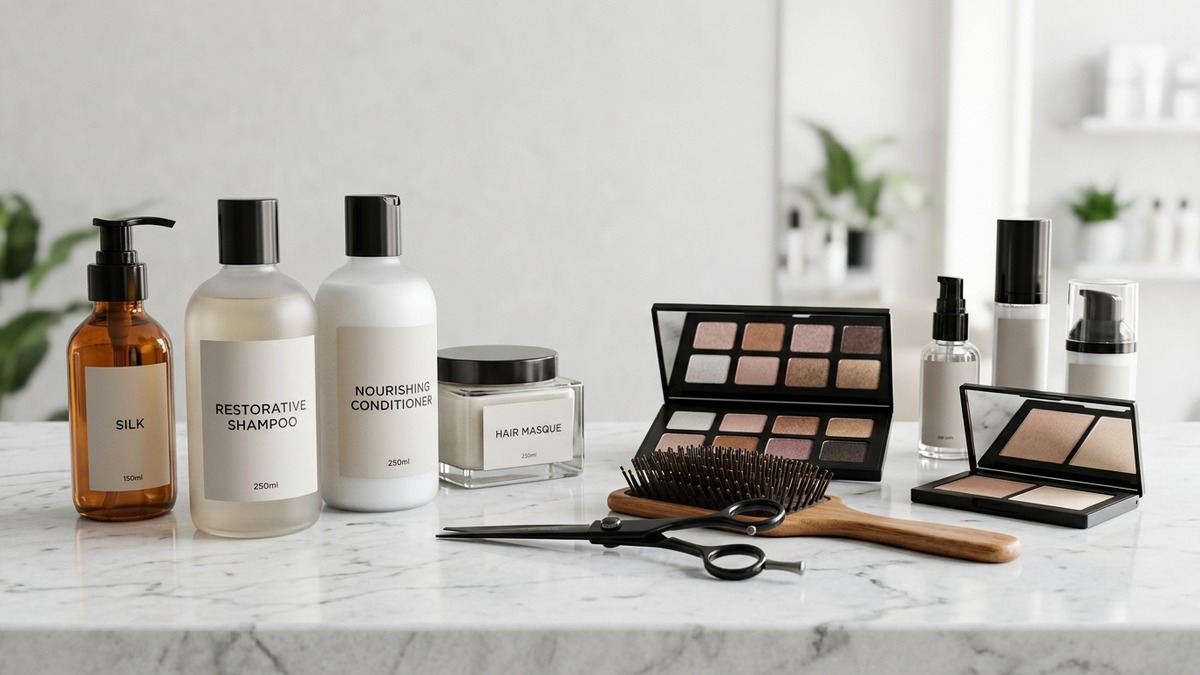
Hair and beauty retail generates consistent repeat business because consumers restock consumables like shampoo, cosmetics, and skincare on regular schedules. Store margins depend directly on opening direct trade accounts with legitimate stocking distributors to avoid intermediate markups.
Commercial beauty distributors in the United States operate under distinct models. Some supply licensed salon professionals exclusively, while others distribute to independent retailers, discount stores, and ecommerce sellers. Understanding distributor requirements, standard margin tiers, and verification practices helps store buyers secure authentic inventory at genuine trade pricing.
Quick Answer
Wholesale hair and beauty distributors in the United States divide into professional and commercial trade suppliers. Licensed stylists and salons source professional color and salon-grade formulations from SalonCentric (L’Oreal subsidiary, 600+ locations) and CosmoProf (1,200+ stores, 25,000+ catalog SKUs). Independent retailers, beauty supply shops, and ecommerce vendors source consumer lines, extensions, and personal care from open commercial distributors like Jinny Beauty Supply (multicultural and textured hair lines), Marlo Beauty Supply, and direct manufacturer programs like Kiss Products. Wholesale trade discounts average 30% to 60% below MSRP. Verified supplier listings are accessible in the Health, Beauty & Wellness directory.
What this guide covers
- What hair and beauty wholesale means
- The best wholesale hair and beauty distributors
- Product categories and margin profiles
- Distributor comparison table
- Wholesale pricing and profit margins
- Authenticity and avoiding counterfeit stock
- How to establish a hair and beauty resale business
- Identifying fraudulent beauty suppliers
- Frequently asked questions
Key terms and glossary
- Broadline distributor
- A supplier stocking a wide variety of brands and categories, enabling retailers to source multiple product lines on a single consolidated invoice.
- Professional line
- Salon-grade hair color, chemical treatments, and formulas restricted to licensed cosmetologists, barbers, or registered salon businesses.
- Private label
- Unbranded formulations manufactured for retailers to package and sell under their own proprietary brand names.
- Gray market
- Authentic merchandise imported or diverted outside official manufacturer distribution networks.
- MOQ
- Minimum order quantity or initial dollar threshold required by a distributor to open a trade account.
- Resale certificate
- A state-issued tax document proving that inventory is purchased for resale, enabling sales-tax exemption at purchase.
What hair and beauty wholesale means
Commercial beauty wholesale operates as a business-to-business transaction channel. Wholesalers sell in case lots, master cartons, or minimum order thresholds to commercial buyers holding valid state resale certificates. Legitimate trade distributors require tax identification and business credentials before releasing wholesale price schedules.
The market encompasses professional salon care, consumer cosmetics, textured hair extensions, and personal care staples like body washes, lotions, and shaving supplies. Pricing structures vary by merchandise velocity. Widely distributed drug-store brands deliver gross margins between 20% and 35%, while salon-exclusive formulas, textured hair care, and private-label product lines yield gross margins between 45% and 60%.
The best wholesale hair and beauty distributors
Selecting a wholesale distributor depends primarily on whether your business holds a state cosmetology license or operates as a general retail reseller. Supplier networks maintain strict account boundaries based on these regulatory credentials.
For licensed salon professionals
SalonCentric
SalonCentric, a subsidiary of L’Oreal USA headquartered in Clearwater, Florida, operates more than 600 physical branch stores alongside a national freight delivery network. Established in 2008, the distributor maintains an inventory of over 10,000 SKUs encompassing professional hair color, developer, salon styling tools, and treatment lines from manufacturers including Redken, Matrix, Biolage, Pulp Riot, and L’Oreal Professionnel.
Account requirements: Active state cosmetology license, barber license, or salon business registration. Consumer purchasing is prohibited.
Primary strengths: Factory-direct authorizations for salon color systems, same-day branch pickup, and dedicated regional account managers.
CosmoProf
CosmoProf, the professional distribution arm of Beauty Systems Group (a subsidiary of Sally Beauty Holdings), operates more than 1,200 store locations and deploys 800 salon sales consultants across North America. The catalog features over 25,000 products across hair color, chemical relaxers, specialty nail systems, and barber supplies, carrying key brands such as Wella, Olaplex, Paul Mitchell, Joico, and Schwarzkopf.
Account requirements: Verified cosmetology or aesthetician license.
Primary strengths: Expansive local store footprint for urgent walk-in stock replenishment, bi-monthly promotional circulars, and educational credit seminars.
Marlo Beauty Supply
Marlo Beauty Supply has operated for over 40 years as an independent direct-to-salon distributor. Headquartered in Michigan, Marlo distributes professional haircare, waxing kits, manicure supplies, and disposable salon sundries. While select chemical lines require professional licensing, Marlo accommodates registered beauty service businesses and independent practitioners looking for competitive pricing on everyday disposables and salon hardware.
Account requirements: Trade account registration with state resale certificate or salon professional license.
Primary strengths: Transparent online catalog pricing, rapid ground transit across the Midwest and East Coast, and low threshold free shipping incentives.
For retail stores and ecommerce resellers
Most beauty supply store owners, convenience retailers, and ecommerce merchants operate without salon licenses. These businesses source merchandise through distributors that open accounts based on standard corporate registration and resale permits.
Jinny Beauty Supply
Jinny Beauty Supply operates as a dedicated global distributor of multicultural, ethnic, and textured hair products, managing over 60,000 SKUs from 400 manufacturers. With multi-facility distribution warehouses across Atlanta, Chicago, Dallas, and Los Angeles, Jinny supplies retail beauty stores, wig boutiques, and independent merchants with human hair weaves, braiding hair, wig caps, and specialized maintenance oils.
Account requirements: Verified commercial store presence or business resale certificate. No cosmetology license required.
Primary strengths: Volume wholesale access to major multicultural hair brands including SheaMoisture, Cantu, African Pride, and Outre.
Broadline commercial distributors
Independent retailers and ecommerce merchants who do not operate physical styling salons source inventory through broadline consumer beauty and health distributors. These catalog distributors supply over-the-counter shampoo, skincare, personal grooming items, and mass cosmetics to grocery outlets, convenience retailers, and online marketplace sellers. Standard opening order thresholds generally range between $250 and $750.
Account requirements: State sales tax registration and federal employer identification number (EIN).
Primary strengths: Consolidated purchase orders covering multiple consumer goods categories on single freight invoices.
Kiss Products (KISS)
Kiss Products manufactures and distributes press-on artificial nails, false eyelashes, hair styling appliances, and beauty sundries. Direct wholesale dealer programs provide retail stores with countertop merchandising displays, seasonal planograms, and volume case-pack pricing on high-turnover consumer impulse SKUs.
Account requirements: Commercial retail account application and state resale certificate.
Primary strengths: High retail velocity, strong consumer brand recognition, and gross profit margins exceeding 50% on accessory lines.
To verify additional commercial suppliers by geography, consult the Health, Beauty & Wellness wholesale directory and filter by USA location.
Product categories and margin profiles
Each sector within beauty distribution carries different inventory turnover dynamics, unit costs, and gross margins.
Wholesale hair care products
Hair care products, including shampoos, leave-in conditioners, chemical treatments, hair creams, and styling gels, represent the highest unit volume in the sector. Professional salon formulations generate higher margins than mass drug-store brands but require licensed dealer status. Textured hair care and extension maintenance lines show consistent year-round demand and lower return rates.
Cosmetics and makeup
Color cosmetics encompass foundation, lipsticks, mascaras, and application sponges. Mass-market cosmetic brands sell quickly at gross margins between 20% and 30%. High-end and luxury cosmetic lines deliver 40% to 50% margins but require strict chain-of-custody documentation, as counterfeiters target luxury makeup extensively.
Nails, lashes, and beauty accessories
Press-on nails, acrylic powders, strip eyelashes, tweezers, and styling clips generate high gross margins, frequently above 50%. These items take minimal shelf space, do not spoil, and serve as strong point-of-sale impulse purchases in brick-and-mortar retail stores.
Personal care and grooming
Personal care staples including soaps, deodorants, body lotions, and shaving preparations provide stable replenishment orders. These consumable essentials maintain steady sales volume through economic contractions and serve as core inventory for general discount and variety retailers.
Distributor comparison at a glance
| Distributor | Type | Best for | License needed? |
|---|---|---|---|
| SalonCentric | Professional salon distributor (L’Oreal) | Licensed stylists and salons | Yes, cosmetology license |
| CosmoProf | Professional beauty distributor | Widest pro catalog, local pickup | Yes, licensed pros only |
| Marlo Beauty Supply | Direct professional distributor | Independent salons, spas, disposables | Trade account or license |
| Jinny Beauty Supply | Multicultural and ethnic distributor | Textured hair, wigs, extensions | No, business resale certificate |
| Broadline commercial distributors | General consumer beauty distributor | Online merchants, variety stores | No, business resale certificate |
| Kiss Products | Manufacturer-distributor | Nails, lashes, accessories | No, business resale certificate |
Order minimums, authorized brand rosters, and freight terms vary by geographic region. Buyers should confirm specific account requirements directly with suppliers prior to submitting commercial applications.
Wholesale pricing and profit margins
Gross margins in beauty retail fluctuate significantly depending on product classification and volume commitments:
- Trade wholesale pricing generally sits 30% to 60% below manufacturer suggested retail price (MSRP). Mass-market commodity brands cluster near the 25% to 35% margin range, while specialty salon formulations offer 40% to 50%.
- Beauty accessories, synthetic lashes, and press-on nails regularly achieve gross profit margins of 50% to 65%, driven by low manufacturing costs and rapid checkout velocity.
- Tiered volume pricing, master-carton purchasing, and seasonal factory closeouts enable volume merchants to lower their per-unit landed costs.
- Private-label manufacturing allows retailers to develop proprietary brand names for hair serums, body scrubs, and styling pomades, removing direct marketplace price competition.
To calculate potential product profitability before committing capital, test unit numbers using the wholesale price calculator and the profit margin calculator.
Authenticity and avoiding counterfeit stock
Cosmetics and salon hair products represent high-risk counterfeit targets in international trade. Commercial buyers must verify product pedigree before remitting payment:
- Source inventory from authorized distribution houses and verifiable brand partners. Established suppliers require commercial resale documentation and maintain traceable supply chains.
- Verify manufacturer lot numbers and batch codes against cosmetic freshness databases. Skincare, chemical dyes, and emulsion creams carry finite shelf lives and degrade when stored in unconditioned facilities.
- Examine physical product packaging for typography alignment, seal durability, barcode integrity, and ingredient listing compliance.
- Treat luxury branded cosmetics offered at 70% or 80% below retail with skepticism, as authorized luxury fashion brands control distributor allocation tightly and rarely liquidate current-season stock through open channels.
Review the detailed verification procedures in the guide on how to avoid fake wholesale suppliers before sending payment.
How to establish a hair and beauty resale business
- Register a legal business entity and secure a sales tax permit. Establishing an LLC or corporation and obtaining a state resale certificate is mandatory for opening legitimate distributor accounts and purchasing inventory exempt from sales tax.
- Determine licensing requirements based on your product focus. If planning to retail professional chemical hair dyes and salon-exclusive lines, ensure your business entity or staff holds active cosmetology licensing credentials. Retail consumer lines and beauty accessories require standard commercial business registration only.
- Select your primary merchandise category. Store owners typically combine fast-moving mass hair care and cosmetics to generate consistent foot traffic while carrying specialized accessories and textured hair extensions to build higher gross margins.
- Evaluate and shortlist primary distributors. Select two or three reliable suppliers who provide verifiable manufacturer invoices, maintain warehouses within efficient shipping zones, and clearly specify minimum order quantities.
- Execute an initial evaluation order. Review shipment transit times, protective carton packing, product expiration dates, and invoice itemization before allocating major capital.
- Launch your retail or ecommerce channels. Establish your physical store, standalone Shopify storefront, or online marketplace account. Retain all itemized wholesale invoices to satisfy brand gating and invoice ungating requirements on platforms like Amazon.
Identifying fraudulent beauty suppliers
- Absence of business verification: Legitimate wholesale distributors always require a tax ID and state resale certificate before providing B2B wholesale pricing. Websites offering instant open checkouts without dealer onboarding usually operate as retail dropshippers.
- Unrealistic pricing structures: Premium salon and luxury makeup brands maintain strict Minimum Advertised Price (MAP) standards and predictable wholesale cost floors. Severe discounting without manufacturer documentation indicates gray-market diversion or counterfeits.
- Social media liquidation solicitations: Unsolicited messages or accounts on WhatsApp, Telegram, Instagram, and Facebook advertising surplus high-end cosmetics at bulk liquidation discounts carry high fraud rates.
- Missing batch traceability: Authentic cosmetic supply houses provide batch tracking and guarantee product shelf life. Suppliers unable to confirm product manufacture dates should be avoided.
- Demands for non-commercial payment methods: Legitimate trade distributors accept business credit cards, automated clearing house (ACH) bank transfers, and standard net-term accounts. Demands for cryptocurrency, wire transfers to personal accounts, or peer-to-peer mobile payments indicate fraudulent operations.
Key takeaways
- Wholesale hair and beauty distribution divides strictly into licensed professional networks and commercial retail channels.
- SalonCentric and CosmoProf require active cosmetology licenses, while Jinny Beauty Supply, Marlo Beauty Supply, and Kiss Products work with registered retail businesses.
- Gross profit margins average 30% to 60%, with nail products, lashes, and hair accessories generating the strongest profit yields.
- Legitimate trade distributors always demand state resale documentation and provide traceable manufacturer invoices.
- Pre-testing small trial orders allows buyers to inspect batch codes, carton integrity, and product expiration dates before committing major capital.
Find verified hair & beauty suppliers
Browse verified wholesale beauty distributors across the USA, UK, and Canada on WholesaleSeeker.
Frequently asked questions
Who are the best wholesale hair and beauty distributors in the USA?
How much cheaper is wholesale hair and beauty than retail?
Do I need a license to buy wholesale hair and beauty products?
Where can I buy wholesale personal care products?
How do I avoid counterfeit cosmetics from wholesale suppliers?
Can I buy wholesale beauty products without a cosmetology license?
Do I need an FDA license to resell cosmetics?
What hair and beauty products have the best wholesale margins?
This guide is for general informational purposes. Distributor terms, brand authorizations, and wholesale pricing schedules change periodically. Business buyers should verify current terms and authenticity directly with suppliers prior to executing purchase orders.