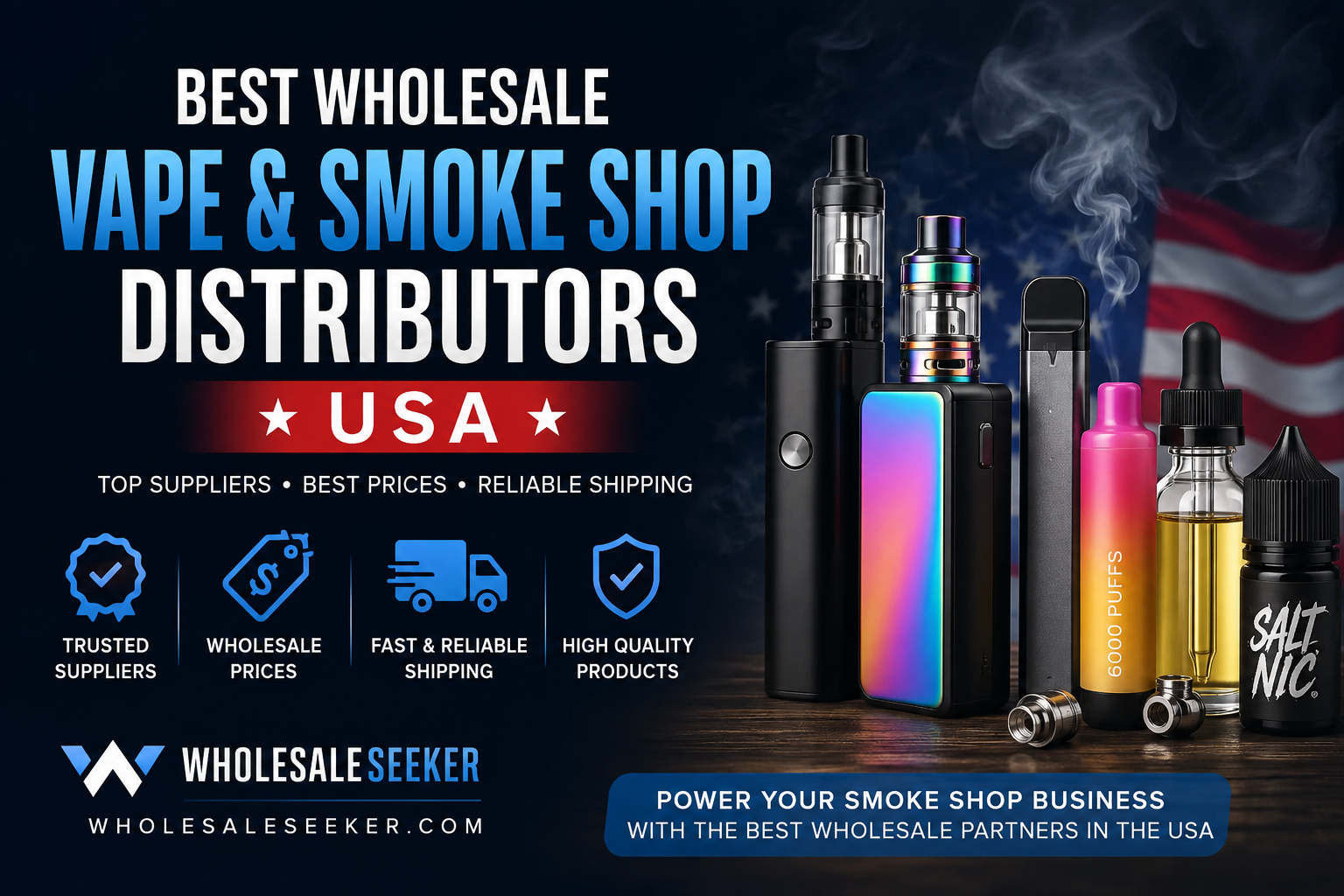
Retail vape and smoke shop profitability depends directly on sourcing authentic inventory through licensed B2B distributors. High-velocity disposable vaporizers drive significant revenue volume for specialty retailers, making reliable fulfillment schedules and compliant supply chains essential. This guide outlines the leading wholesale vape and smoke shop distributors serving licensed merchants in the United States, supplier verification protocols, and statutory compliance mandates for 2026.
Quick Answer
Leading wholesale vape and smoke shop distributors in the United States include World Vape USA, Midwest Goods, Eagle Wholesale, VapeRanger, Wisemen Wholesale, Golden Eagle Distributors, and Kanger Wholesale USA. Verified B2B accounts require active state retail tobacco licenses, state resale tax certificates, and PACT Act shipping registration. Wholesale disposable pricing typically reflects a 40% to 60% discount from suggested retail prices (MSRP). Landed store margins depend directly on state wholesale excise taxes, which range from 0% in non-tax jurisdictions to more than 70% in high-tax states.
What this guide covers
- What vape and smoke shop wholesale means
- The best wholesale vape and smoke shop distributors
- Distributor comparison table
- What to stock: products and categories
- Compliance: PACT Act, licenses, and 21+ rules
- State taxes and flavor bans that change your margin
- Wholesale pricing and margins
- How to vet a vape distributor
- Top vape brands to carry
- Sourcing by business type
- How to open your first wholesale account
- Counterfeits and red flags to avoid
- Frequently asked questions
Key terms: quick glossary
- ENDS
- Electronic Nicotine Delivery Systems. The statutory legal classification covering electronic cigarettes, vaporizers, and pod systems.
- PACT Act
- Preventing All Cigarette Trafficking Act. Federal legislation governing interstate commerce, tax remittance, carrier restrictions, and reporting for tobacco and ENDS products.
- PMTA
- Premarket Tobacco Product Application. FDA marketing authorization protocol determining legal retail sale eligibility in the United States.
- Distributor license
- A state-issued commercial credential required for wholesale warehousing and business-to-business distribution of tobacco and vapor products.
- Excise tax
- State and municipal specialty taxes assessed either as a percentage of wholesale purchase cost or as a per-milliliter levy on e-liquid volume.
- Flavor ban
- State or municipal statutory restrictions prohibiting the retail distribution of characterizing non-tobacco product flavors.
- MOQ
- Minimum order quantity: the smallest order dollar amount or physical unit volume required to open or maintain a trade account.
What vape and smoke shop wholesale means
Vape wholesale operates as a commercial B2B supply model where authorized distributors supply packaged vaporizers, e-liquids, and hardware to licensed retailers at trade pricing, typically 40% to 60% below retail MSRP. The supply chain functions across three primary tiers: manufacturers engineer and produce devices; licensed master distributors import goods, maintain bonded domestic warehouse storage, and process regulatory filings; and independent retailers procure bulk carton orders to supply store shelves.
Smoke shop wholesale encompasses a broader scope of merchandise beyond electronic vapor products. Full-service warehouse suppliers distribute pod systems and disposables alongside traditional counterculture merchandise, including rolling papers, borosilicate glass, herb grinders, butane lighters, water pipes, hookah shisha, and modern nicotine pouches. Functional accessories consistently produce high store margins from limited display footprints. Premium rolling papers, for example, yield 60% to 75% gross retail margins while occupying minimal counter checkout space.
Distributor legitimacy centers on active commercial licensing and statutory compliance. Reputable wholesale distributors maintain state distributor credentials, file monthly ATF reports under the PACT Act, arrange private compliant freight delivery, and enforce state-level flavor distribution restrictions. Distributors who sell prohibited flavored inventory into restricted states expose retail operators to state enforcement actions, tax audit liabilities, and license cancellations.
Operating a store inventory pipeline requires managing supply volatility. Border import detentions and FDA marketing denials can abruptly restrict availability for popular disposable brands, driving wholesale prices up and creating regional retail shortages. Stocking distributors with diversified domestic warehouse hubs provide reliable inventory buffers against supply shocks. Maintaining accounts across two or three qualified suppliers protects stores against unexpected stockouts on core revenue-generating SKUs.
The best wholesale vape and smoke shop distributors
The following B2B suppliers operate established, compliant wholesale distribution networks serving licensed vape, smoke, and convenience retailers across the United States. State shipping permissions, product authorizations, and minimum order rules vary by jurisdiction, requiring direct account verification prior to order placement.
1. World Vape USA
World Vape USA operates as a national wholesale distributor licensed across all 50 states, providing centralized freight delivery for retail accounts. The company supplies high-capacity disposables, premium e-liquids, salt nicotine formulations, and replacement pod hardware to independent vape shops, smoke shops, and commercial convenience operators. Direct factory authorization channels provide inventory verification against counterfeit hardware. Multi-state licensing simplifies procurement for retail operators managing locations across multiple legal jurisdictions.
2. Midwest Goods (Midwest Distribution)
Midwest Goods is an established Illinois-based distributor recognized for extensive catalog depth across electronic vaporizers, replacement atomizers, and smoke shop hardware. High warehouse throughput enables competitive volume tier pricing on premier disposable lines and bulk accessories. The distributor serves as a primary supply partner for regional retail store networks requiring consolidated multi-category purchase orders.
3. Eagle Wholesale
Eagle Wholesale operates fulfillment operations from Charlotte, North Carolina, supplying a combined catalog of vapor devices, smoke shop accessories, and high-turnover convenience store goods. The company caters to merchants operating hybrid retail footprints, offering bundled wholesale purchasing across packaged nicotine lines, lighters, and grab-and-go counter inventory.
4. VapeRanger
VapeRanger focuses strictly on business-to-business procurement with structured volume pricing tiers for commercial retailers. In addition to carrying large inventory reserves of disposable devices and e-liquids, the platform provides state-by-state statutory compliance documentation, helping retail buyers track local shipping bans and flavor restrictions.
5. Wisemen Wholesale
Wisemen Wholesale is a state-licensed distributor based in Bensenville, Illinois. The company maintains an inventory catalog exceeding 10,000 active SKUs spanning disposable vaporizers, nicotine salts, open pod systems, and traditional smoke shop accessories. The distributor processes PACT Act compliant regional freight to authorized retail accounts across all 50 states, offering same-day handling on qualified morning orders.
6. Golden Eagle Distributors
Golden Eagle Distributors (GED), based in Chicago, maintains a distribution catalog of more than 5,000 items across approximately 400 brands, including Lost Mary, Elf Bar, Vaporesso, SMOK, and Geekvape, alongside core smoke shop dry goods. The company offers low minimum order quantity thresholds, accommodating emerging storefronts and localized product testing. Detailed facility credentials and trade contact details are indexed on the WholesaleSeeker Golden Eagle profile.
7. Kanger Wholesale USA and Specialist Distributors
Kanger Wholesale USA and regional specialized distributors provide targeted catalog coverage for specific device ecosystems, open-system hardware, and localized rapid delivery. Metro-based distributors in logistics centers like Las Vegas and Atlanta provide dedicated regional courier transit for fast inventory turns. Retailers can review vetted national and regional suppliers, including LA Wholesale Kings, within the comprehensive Vape Products and E-Liquids directory on WholesaleSeeker.
Distributor comparison at a glance
| Distributor | Headquarters | Primary Retail Focus | Catalog Strength |
|---|---|---|---|
| World Vape USA | Nationwide Coverage | Multi-state and ecommerce storefronts | Disposables, bottled e-liquid, closed pod devices |
| Midwest Goods | Illinois | High-volume retail vape stores | Broad catalog of vape hardware and counter accessories |
| Eagle Wholesale | Charlotte, North Carolina | Hybrid smoke shops and convenience stores | Vape consumables and convenience merchandise |
| VapeRanger | National B2B Network | Compliance-focused commercial buyers | Verified disposables and specialty e-liquids |
| Wisemen Wholesale | Bensenville, Illinois | High SKU volume and licensed operators | 10,000+ SKUs across vapor and smoke accessories |
| Golden Eagle (GED) | Chicago, Illinois | New storefronts and low-MOQ buyers | 400+ brands and 5,000+ commercial products |
| Specialist / Regional Suppliers | Regional Hubs | Metropolitan same-day delivery | Focused open hardware and local freight routes |
Licensing credentials, brand distribution rights, and interstate shipping authorizations change periodically. Confirm delivery territory boundaries, excise tax policies, and account compliance terms directly with each supplier before issuing purchase orders.
What to stock: products and categories
A balanced store inventory pairs high-velocity disposable devices with high-margin smoking accessories to support predictable daily cash flow and insulate store earnings against regulatory disruptions.
Disposable vapes
Pre-filled disposable vaporizers represent the highest-volume sales category for modern retail shops. Customers display strong brand loyalty to specific puff counts, ergonomic form factors, and dual-mesh coil systems. Disposables remain the most strictly regulated merchandise segment, as state and municipal restrictions primarily target flavored disposable formulations.
E-liquids, salt nic, and pods
Bottled freebase nicotine, salt nicotine blends, and refillable pod cartridges cater to regular, experienced vapor consumers. These products provide stable repeat purchase cadences and consistent gross margins, generating reliable baseline store volume alongside disposable inventory.
Hardware and devices
Box mods, rebuildable tanks, sub-ohm atomizers, replacement coils, external lithium-ion batteries, and charging equipment. While hardware lines turn over at lower velocity than consumable products, higher average order values cater to hobbyist customers who maintain reusable systems.
Smoke shop accessories
Unbleached rolling papers, borosilicate water pipes, multi-piece herb grinders, refillable lighters, hookah coals, shisha, and tobacco-free nicotine pouches. Functional accessories consistently return the highest percentage gross margins in the retail footprint and operate free from vapor-specific product bans, stabilizing store revenue during localized regulatory changes.
Compliance: PACT Act, licenses, and 21+ rules
Regulatory adherence defines long-term store viability. Retail operations must satisfy specific federal, state, and municipal mandates to maintain active commercial status.
The PACT Act
The federal Preventing All Cigarette Trafficking (PACT) Act regulates interstate transit of tobacco and all ENDS devices. Commercial shippers must register formal business filings with the Bureau of Alcohol, Tobacco, Firearms and Explosives (ATF) and state tax departments in every destination state. The United States Postal Service (USPS) strictly prohibits mailing vapor products to residential consumers, reserving parcel services only for approved B2B exceptions between verified licensed businesses. Commercial private freight carriers maintain specialized compliance protocols for wholesale transport.
Licenses you need
Procuring wholesale inventory requires maintaining a registered legal business entity, a state resale tax certificate, and an active state tobacco or vapor retail sales license. Legitimate wholesale distributors enforce mandatory verification of these credentials prior to opening trade accounts.
The 21+ rule
Federal Tobacco 21 statutes prohibit the retail distribution of tobacco and electronic vapor devices to individuals under 21 years of age. Point-of-sale checkout terminals equipped with automated government ID barcode scanners provide the most reliable verification method across retail shifts. Commercial deliveries require adult signature confirmation and physical identification inspection upon handover.
PMTA and product authorization
The FDA Premarket Tobacco Product Application framework governs legal commercial marketing authorization for all electronic nicotine delivery systems. The FDA periodically updates its list of authorized electronic nicotine products, and retailers can face civil monetary penalties exceeding $21,000 per violation for marketing unauthorized items in jurisdictions actively enforcing federal marketing orders.
State taxes and flavor bans that change your margin
Geographic location directly dictates inventory selection, pricing strategies, and final retail net profitability due to state-level statutory variances.
Excise tax
State excise taxes represent the most significant cost variable in retail vapor pricing. Tax assessments vary widely, from zero excise tax in select states to rates exceeding 70% of wholesale invoice value in others. Certain states levy volumetric taxes calculated per milliliter of e-liquid in place of percentage-based wholesale levies. For example, a $10 wholesale disposable requires an $18 retail price in a tax-free market to yield standard margins, whereas the same item in a high-excise jurisdiction must retail significantly higher to absorb state tax burdens.
Flavor bans
Multiple states and major metropolitan centers prohibit the commercial distribution of flavored vapor products. California enforces strict standards allowing only state-approved unflavored tobacco items cataloged on the state Department of Justice directory, excluding virtually all fruit and confection disposable lines. New York and New Jersey restrict direct-to-consumer parcel transit for ENDS products. Retailers in ban jurisdictions must focus catalogs on compliant tobacco-derived formulations, open refillable hardware, and traditional smoking accessories.
Wholesale pricing and margins
Gross margin realization depends on calculating landed unit costs that integrate product price breaks, inbound freight, and applicable state excise taxes:
- Wholesale Base Pricing: Standard wholesale pricing sits 40% to 60% below retail MSRP across disposable lines, bottled e-liquids, and replacement coils.
- Tiered Volume Discounts: Case-pack and master-case purchasing tiers lower per-unit acquisition costs, improving margin headroom for well-capitalized retailers.
- Accessory Profitability: Rolling papers, glass water pipes, and lifestyle accessories return 60% to 75% gross margins with minimal regulatory exposure.
- Excise Tax Adjustments: Retail shelf prices must account for whether distributors collect and remit state excise taxes on invoice or require store self-remittance.
- Opening Account MOQs: Initial purchase order minimums range from $250 to $500 for flexible suppliers like Golden Eagle, while large master distributors may establish $1,000 to $2,500 thresholds.
True profitability reflects landed margin: wholesale cost, applicable state and local excise taxes, and inbound freight compared against sustainable local retail price ceilings.
How to vet a vape distributor
Before executing trade agreements or issuing initial inventory deposits, verify the following operational standards:
- Confirm Destination Shipping Compliance: Verify the distributor maintains active PACT Act registrations and authorized carrier logistics into your retail state.
- Verify Flavor Policy Enforcement: Legitimate distributors reject purchase orders for flavored inventory destined for flavor-ban jurisdictions, maintaining regulatory alignment.
- Clarify Excise Tax Accounting: Determine whether the invoice includes state tobacco excise tax or requires internal accounting and state tax remittance by the merchant.
- Audit Carrier Transport Methods: Confirm shipments move through compliant private B2B freight carriers, avoiding unauthorized residential parcel routes.
- Demand Authenticity Guarantees: Require written manufacturer authorization records to ensure devices contain verified battery cells and lab-tested e-liquid batches.
- Inspect Distributor Licensing: Require copies of the distributor’s state tobacco distributor credentials alongside standard corporate resale certificates.
- Place an Initial Sample Order: Evaluate transit times, protective packaging quality, and line-item invoice accuracy on an opening trial order before scaling capital.
How to open your first wholesale account
Establishing commercial wholesale accounts follows a standard administrative progression:
- Register Corporate Entity: Form a formal business structure (LLC or Corporation) and obtain a federal Employer Identification Number (EIN).
- Procure Retail Licenses: Secure a state sales tax resale certificate and the required state and municipal tobacco/vape retail operating licenses.
- Audit Local Jurisdiction Rules: Document applicable state excise rates, local flavor ordinances, and zoning delivery restrictions governing your physical store location.
- Select Compliant Distributors: Identify two or three qualified suppliers that maintain licensed logistics routes into your state. Use the US wholesale distributor directory to confirm regional distribution hubs.
- Submit B2B Applications: Provide business registration certificates, state tobacco licenses, and corporate bank references to complete onboarding.
- Issue Initial Verification Orders: Process small-batch trial orders to confirm shipment speed, product packaging condition, and invoicing protocols.
- Build a Diversified Inventory Stack: Balance fast-turning disposables with high-margin smoking accessories to stabilize monthly cash flow.
Counterfeits and red flags to avoid
Due to high market demand, the electronic vapor sector experiences gray-market and counterfeit distribution risks. Monitor suppliers for these critical operational warning signs:
- Sub-Market Pricing: Wholesale pricing priced substantially below standard manufacturer cost schedules indicates diverted, expired, or counterfeit inventory.
- Absence of Credential Verification: Suppliers willing to fulfill orders without requiring state tobacco retail licenses or resale tax documentation operate outside legal commerce channels.
- Willingness to Ship Restricted Goods: Suppliers willing to route flavored inventory into ban states demonstrate disregard for compliance, exposing retailers to legal penalties.
- Unclear Shipping Protocols: Inability to detail PACT Act compliant shipping carriers signals unauthorized transit methods vulnerable to carrier confiscation.
- Lack of Manufacturer Sourcing Documentation: Legitimate master distributors provide direct factory tracing and batch authentication codes for every production run.
Top vape brands your distributor should carry
Customer acquisition and retention depend heavily on stocking recognized, laboratory-verified product lines. Retail stores rely on distributors stocking these established market brands:
- Disposable Lines: Lost Mary, Elf Bar, Geek Bar, and Foger dominate disposable transaction volume. Product availability is subject to state-specific flavor statutes.
- Hardware and Pod Systems: SMOK, Vaporesso, Geekvape, and Uwell manufacture the leading box mods, sub-ohm atomizers, and refillable pod ecosystems.
- Smoking Accessories: RAW, Blazy Susan, BIC, and Clipper anchor high-margin rolling paper, counter accessory, and lighter displays.
Sourcing marquee brands through authorized distribution channels prevents counterfeit battery and formulation risks, protecting retail store reputation and customer safety.
Sourcing by business type: vape shop, smoke shop, or c-store
Optimal supplier partnerships align directly with retail store formats and specific customer shopping habits.
Dedicated vape shops
Specialty vape storefronts focus on e-liquids, salt nicotine, open hardware, and high-performance disposables, served by staff providing technical product guidance. These retailers benefit from master distributors with deep hardware catalogs and strong brand allocations, such as World Vape USA, Midwest Goods, and Wisemen Wholesale.
Smoke shops
Smoke shops combine selected vapor products with extensive dry smoking accessories, including artisan glassware, rolling papers, herbal grinders, hookah coals, and premium cigars. Full-line suppliers such as Eagle Wholesale and Golden Eagle Distributors allow single-source procurement for mixed inventory walls. Attending in-person trade events like the CHAMPS Las Vegas trade show provides direct manufacturer relationships for new accessory lines.
Convenience stores
Convenience stores prioritize compact, high-turnover disposables, closed-pod refills, and packaged nicotine pouches alongside food and beverage goods. Distributors supplying combined convenience and tobacco lines allow store managers to consolidate replenishment deliveries onto existing route trucks, optimizing delivery schedules.
Key takeaways
- Leading wholesale vape and smoke shop distributors in 2026 include World Vape USA, Midwest Goods, Eagle Wholesale, VapeRanger, Wisemen Wholesale, and Golden Eagle Distributors.
- Wholesale pricing delivers 40% to 60% discounts below retail MSRP, with net margins determined by state excise taxes ranging from 0% to over 70%.
- Regulatory requirements include federal PACT Act registration, state retailer and distributor licensing, strict 21+ age verification, and FDA PMTA compliance.
- State flavor statutes vary significantly. California permits only unflavored state-listed products, while multiple jurisdictions prohibit direct-to-consumer parcel delivery.
- Reputable distributors strictly enforce state flavor restrictions, protecting retailers from regulatory fines and license revocations.
- Functional accessories (rolling papers, glass pipes, grinders) produce 60% to 75% gross margins and remain insulated from vapor-specific bans.
- Verify state licensing credentials, confirm compliant B2B transport routes, and place a trial order before committing large capital reserves.
Find verified wholesale suppliers on WholesaleSeeker
Browse verified commercial wholesale distributors and smoke shop suppliers across the United States, complete with verified contact details and direct trade access.
Browse Vape and Smoke Shop SuppliersFrequently asked questions
Do I need a license to buy wholesale vapes?
What is the PACT Act and how does it affect wholesale buyers?
How much cheaper is wholesale than retail for vapes?
Can distributors ship flavored disposables to any state?
Which wholesale vape distributor is best for a new shop?
Are smoke shop accessories worth stocking alongside vapes?
How do I avoid counterfeit vape products?
Related guides on WholesaleSeeker: Best Wholesale Liquidation Pallet Suppliers · Top USA Wholesale Suppliers for Amazon FBA · Vape Products and E-Liquids Directory · CHAMPS Las Vegas Trade Show · USA Wholesale Distributors
This guide is for general informational purposes for licensed commercial businesses and does not constitute formal legal counsel. State and municipal tobacco statutes, excise tax schedules, and marketing authorizations change frequently. Verify all current statutory requirements with local state revenue and tobacco control boards before issuing purchase orders.