

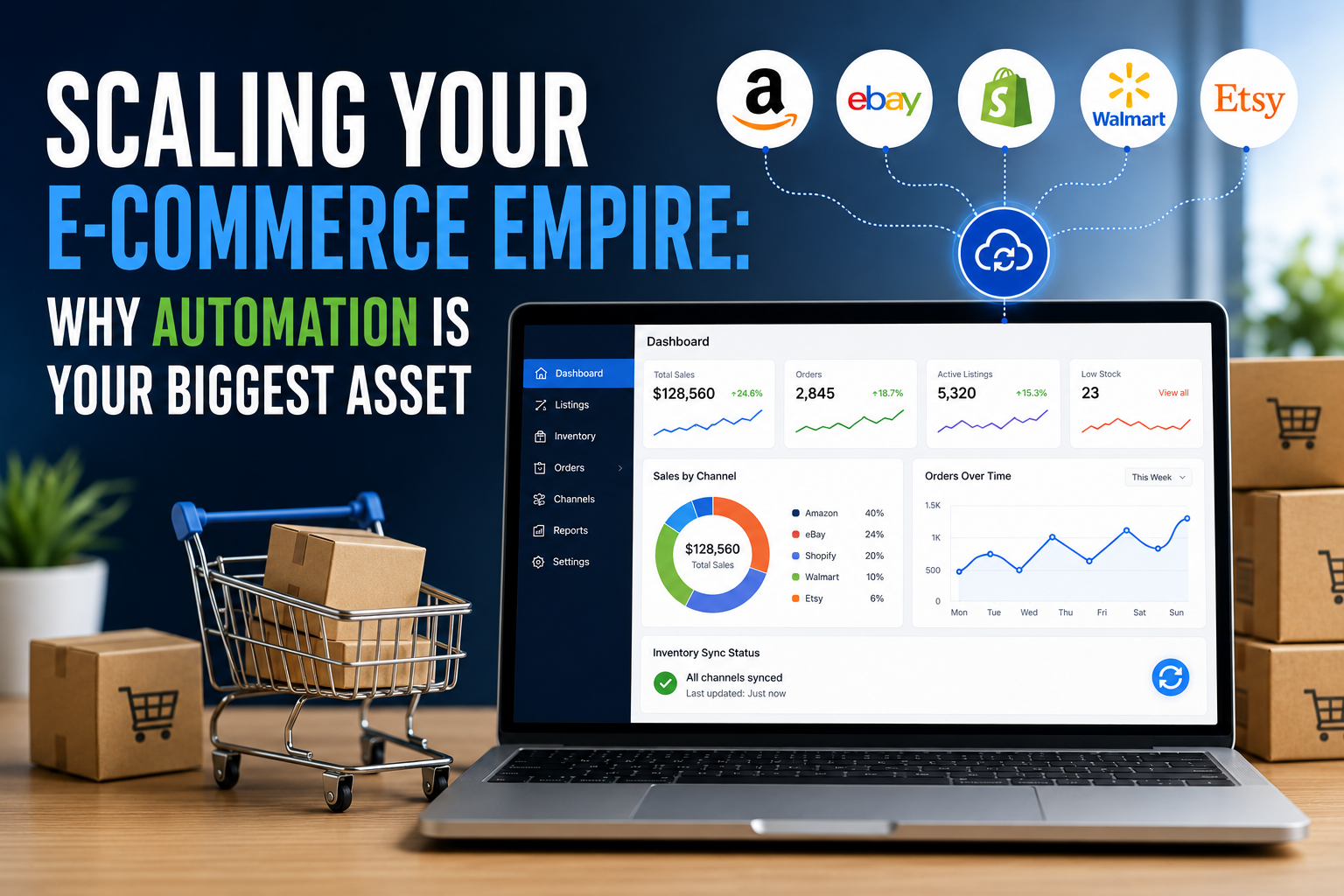
In the competitive landscape of modern e-commerce, the difference between a side hustle and a thriving business often comes down to one thing: scalability. When you are just starting out, managing a single store on multi channel listing software feels like a full-time job.
You are manually updating stock, chasing down order confirmations, and balancing customer queries across different interfaces. But what happens when you decide to grow? The moment you expand to a second or third channel, the manual processes that once kept your business afloat start to become the very things that hold it back.
The Complexity of Growing Beyond One Channel
Expanding to multiple sales channels is a logical step for any brand looking to increase visibility. However, the operational reality of managing separate inventories and customer databases is a nightmare for the uninitiated.
You run the risk of overselling stock that doesn’t exist, failing to sync pricing updates across platforms, and losing track of critical shipping deadlines. These aren’t just minor inconveniences; they are major operational failures that can lead to account suspensions and a plummeting seller rating.
Many sellers try to solve this by hiring more staff, but adding humans to a flawed process only increases costs and complexity. The real solution lies in centralizing your operations, moving away from the chaos of individual dashboards, and adopting a smarter way to manage your digital storefronts.
Centralizing Your Workflow
The key to long-term success in e-commerce is creating a “single source of truth” for your business data. This is where a dedicated multi channel listing software becomes an indispensable asset.
Instead of logging into five different sites to update your inventory levels, you make a change in one place, and the software handles the distribution across all your connected channels.
This level of automation does more than just save you time-it provides the operational safety net you need to grow. With an automated system, your inventory is synced in real-time, regardless of where the sale takes place. When you make a sale on your Shopify store, your Amazon and eBay listings update instantly. This eliminates the fear of overselling and allows you to focus on the more strategic parts of your business, such as product development and marketing campaigns.
The Competitive Advantage of Speed
In e-commerce, time is quite literally money. The faster you can get a new product live across all your sales channels, the sooner you can start generating revenue. Manual listing is a slow, tedious process that eats away at your potential profit margins. Automation allows you to deploy new product lines across your entire network in minutes, not hours. This agility allows you to jump on trends, test new markets, and react to competitor movements without being dragged down by administrative bottlenecks.
By utilizing high-level automation tools, you are positioning your brand to act like a much larger enterprise. You can handle higher order volumes, manage more complex catalogs, and expand into international markets with a fraction of the traditional overhead. The goal is to build a business that runs smoothly in the background, allowing you to focus on the high-level decisions that actually drive growth.
Building for the Future
As you look toward the next stage of your business, ask yourself if your current setup can handle a 10x increase in volume. If the answer is no, it’s time to rethink your infrastructure. You shouldn’t be spending your day copying and pasting data between platforms. You should be analyzing your performance metrics, identifying new opportunities, and refining your brand strategy. Automating your backend operations isn’t just about convenience; it’s about professionalizing your business model so it can survive and thrive in an increasingly crowded market.
Key Takeaways for E-commerce Sellers
- Break the Manual Cycle: Identify the repetitive tasks that are eating up your time and replace them with automated workflows.
- Synchronize Inventory: Prevent overselling and stockouts by using a centralized system that updates all channels in real-time.
- Increase Listing Speed: Use automation to push new products to all your marketplaces simultaneously, maximizing your time-to-market.
- Focus on Strategy: Shift your attention from backend logistics to high-value activities like product sourcing and customer experience.
- Prepare for Scale: Build an infrastructure today that will comfortably handle the growth you expect to achieve tomorrow.
Conclusion
The leap from a single-channel seller to a multi-channel powerhouse is significant, but it doesn’t have to be overwhelming. By investing in the right digital tools, you remove the operational friction that keeps your business small. Whether you are scaling your current operations or planning your next big move, having the right technology in place is the foundation of every successful e-commerce brand. Embracing automation today is the best way to ensure your business remains agile, profitable, and ready for whatever the market brings next.





1 Comment
Pingback: Dropshipping Suppliers That Ship From USA (2-3 Day Delivery Guide 2026)